
Cannabis Terpenes Guide for Better Strain Choices
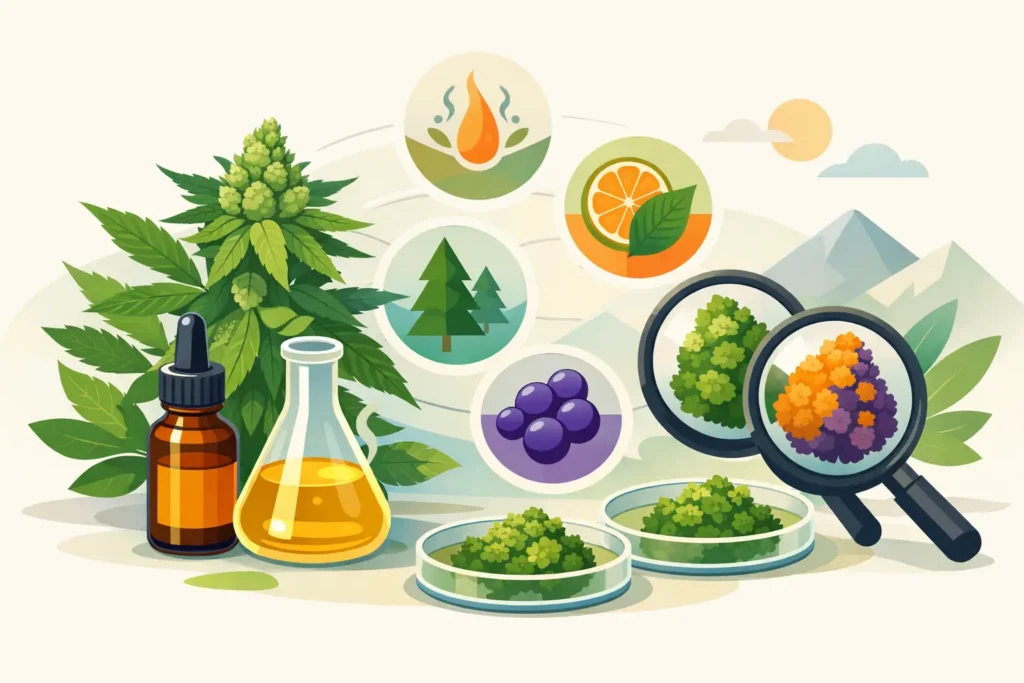
That sharp citrus lift in one flower and the deep, earthy scent in another are not just strain-name marketing. They come largely from terpenes: naturally occurring aromatic compounds that shape how cannabis smells, tastes and feels. This cannabis terpenes guide gives Australian adults a practical way to read terpene profiles, compare products and choose with more confidence.
Terpenes are worth knowing because THC percentage tells only part of the story. Two products with similar cannabinoid content can smell completely different and suit different moments, preferences and tolerances. Aroma is personal, effects vary from person to person, and the strain name on its own is never a guarantee.
What are cannabis terpenes?
Terpenes are aromatic compounds found throughout nature. They give lemons their bright peel scent, lavender its floral character, pine needles their fresh sharpness and black pepper its spice. Cannabis plants produce a broad range of them in tiny resin glands alongside cannabinoids such as THC and CBD.
In cannabis, terpenes are most noticeable through aroma and flavour. A flower may come across as sweet, diesel-like, fruity, herbal, peppery, piney or creamy because of its particular terpene mix. That profile is affected by the plant’s genetics, growing conditions, curing process, storage and age.
You will often hear people talk about the “entourage effect” – the idea that cannabis compounds may work differently in combination than they do alone. It is a useful concept for understanding why whole-plant products can feel distinctive, but it should not be treated as a promise. Research into terpene effects in people is still developing, and labels such as relaxing, uplifting or focused are best used as broad shopper feedback, not clinical certainty.
Cannabis terpenes guide: the profiles you will see most
Most products contain several terpenes, rather than one single dominant compound. Still, knowing the most common names makes a menu, product description or lab result far easier to understand.
Myrcene
Myrcene is commonly associated with earthy, musky, herbal and sometimes mango-like notes. It appears often in fuller-bodied cannabis varieties and is regularly linked by consumers with a slower, more settled experience. That does not mean every myrcene-rich product will make every person sleepy. Dose, THC level, your setting and your own tolerance all matter.
If you enjoy old-school, earthy flower or varieties with a rich, hash-like aroma, myrcene may be part of what you are responding to.
Limonene
Limonene brings bright citrus character: think lemon zest, orange peel and sweet tang. It is popular with shoppers who prefer fresh, clean-smelling flower and vape profiles. Many people describe limonene-forward options as lively or mood-brightening, though individual experience can differ significantly.
Limonene can be a useful starting point for people who find heavy, dank aromas less appealing and want something fruitier without choosing based on flavour names alone.
Caryophyllene
Beta-caryophyllene has a peppery, woody, clove-like edge. It is found in black pepper, rosemary and hops as well as cannabis. This terpene is especially interesting because it interacts with CB2 receptors in laboratory research, but that does not turn a caryophyllene-rich product into a medical treatment.
For practical shopping, look for caryophyllene when you enjoy spice, fuel, wood and savoury notes. It commonly appears in cultivars with dense, pungent aroma profiles.
Pinene
Pinene smells like fresh pine, rosemary, herbs and forest air. Alpha-pinene and beta-pinene are both found in cannabis, though product labels may simply say “pinene”. Fans often choose pine-forward profiles for their crisp, less sweet character.
Pinene is a good reminder that terpene preferences are not only about effects. Sometimes you simply want a strain that smells clean, green and sharp rather than dessert-like or gassy.
Linalool
Linalool is best known for its floral, lavender-like aroma. In cannabis, it can bring a soft, sweet and slightly spicy quality that rounds out louder citrus or fuel notes. Shoppers who prefer gentler aromatic profiles often enjoy linalool when it appears alongside myrcene or caryophyllene.
It is frequently described online as calming. Treat that as a possible preference pattern, not a dependable outcome. The same product can land differently after a long day, with a lower dose or in a different environment.
Humulene
Humulene is woody, earthy and hop-like. It shows up in beer hops and can add a dry, herbal finish to cannabis. It is often found beside caryophyllene, making it common in savoury, spicy and classic cannabis profiles.
A humulene-forward flower will not necessarily be the loudest smelling option, but it may appeal to people who want less sweetness and more of a traditional herbal character.
How to use terpene information when choosing cannabis
Start with the experience you want from the aroma, not a guaranteed effect. If you love citrus, look for limonene. If you gravitate towards peppery, gassy or woody flower, caryophyllene and humulene may be more relevant. For earthy, rich scents, myrcene is often a useful clue. This is more reliable than assuming an indica, sativa or hybrid label will tell you exactly what to expect.
Next, check the whole profile. A product with limonene as the leading terpene can still feel very different when it also has high myrcene, pinene or linalool. The leading terpene tells one part of the story; the supporting compounds add depth. Think of it like coffee: a citrus note matters, but roast, origin and preparation change the final cup.
Then factor in cannabinoids and format. A high-THC flower with a citrus profile is not automatically mild just because it smells fresh. CBD products can also contain terpenes, but their effects and intensity depend on the formula. With vape cartridges, flavour additives may be used alongside cannabis-derived or botanical terpenes, so read product information carefully if authenticity of flavour matters to you.
Finally, keep notes. When you find a product you enjoy, record the dominant terpenes, THC or CBD content, product format and the setting in which you used it. After a few purchases, this creates a much better personal guide than relying on popular strain names.
Why the same strain can smell different
A strain name is not a fixed recipe. Blue Dream, White Widow or Super Silver Haze grown by different producers may share a genetic background while showing noticeably different terpene levels. Harvest timing, nutrients, drying, curing and packaging all influence what reaches the consumer.
Heat, light and oxygen can reduce aromatic quality over time. Store legal cannabis products in a cool, dark place with the lid properly sealed. Avoid leaving flower in a hot car, on a sunny windowsill or open to the air. Strong packaging protects privacy during delivery, but correct storage at home helps preserve the flavour you paid for.
Freshness also matters. If a product has little aroma despite being labelled terpene-rich, it may have been stored poorly or may simply be older. A fragrant product is not automatically better or stronger, but a clear, clean aroma is often a good sign that the flower has been handled with care.
Terpenes and safety: keep expectations realistic
Terpenes are natural, but natural does not mean risk-free for everyone. Cannabis can impair coordination, judgement and reaction time. Do not drive, ride, operate machinery or make safety-critical decisions after using THC products. If you are new to cannabis, start cautiously, wait before taking more and avoid mixing with alcohol or other substances.
People who are pregnant, breastfeeding, managing a health condition or taking medication should seek advice from an appropriate health professional before using cannabis or CBD. If a product causes discomfort, anxiety, dizziness or an unexpected reaction, stop using it and get medical advice where needed.
Terpene labels can help adults make more informed choices, but they are not a substitute for responsible use, verified product information or local legal requirements. Cannabis laws and access rules differ across Australia, so check what applies where you live.
Choosing for flavour without getting lost in jargon
The easiest way to begin is to follow your nose. Citrus lovers can explore limonene-led profiles. Fans of incense, pepper and fuel can look for caryophyllene and humulene. If you prefer earthy, old-school cannabis aromas, start with myrcene. For floral and softer notes, look towards linalool.
Once you know what you enjoy, use terpene details to narrow the options rather than chase a perfect promise. A thoughtful choice is usually a better one: clear product information, sensible storage, a familiar format and an aroma profile that genuinely appeals to you.