
Indica vs Sativa Effects: What Actually Matters
A strain name can give you a rough starting point, but it cannot promise how your night will feel. When people compare indica vs sativa effects, they are usually asking a simple question: will this help me switch off, or will it leave me chatty, creative and ready to get on with things? The honest answer is that both labels can be useful, but neither tells the full story.
For adult consumers, a better choice comes from looking beyond the big indica or sativa label. THC strength, CBD content, aroma compounds called terpenes, how much you use, and your own mood all have a say. That is where the real difference tends to show up.
Indica vs sativa effects at a glance
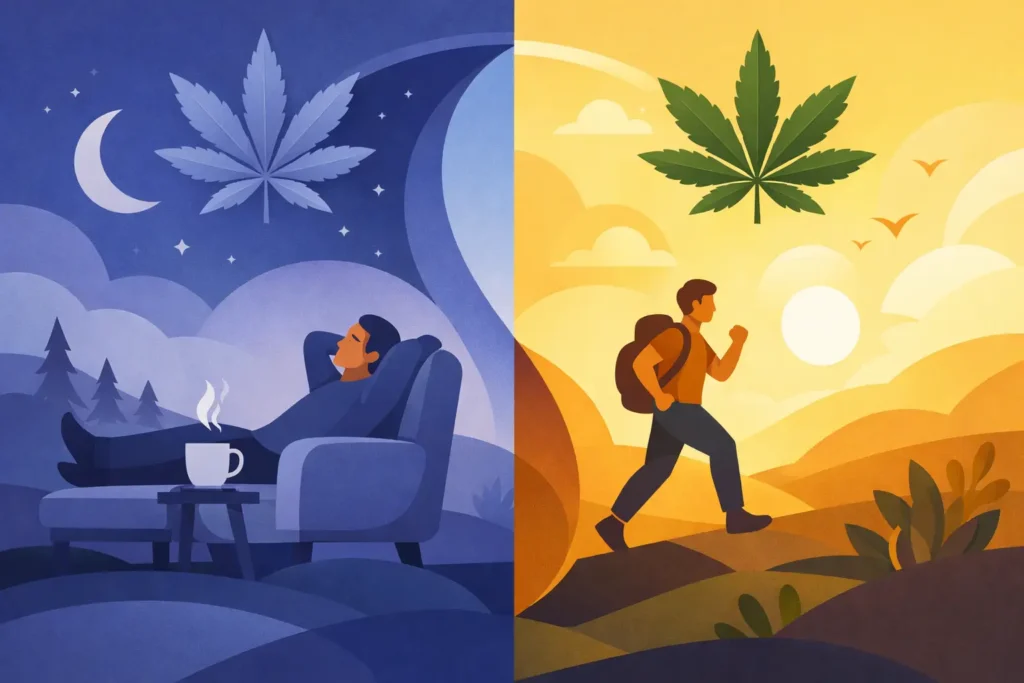
Traditionally, cannabis has been described in two broad camps. Indica is commonly associated with a heavier body feel, calm evenings and slower-paced plans. Sativa is often linked with a brighter head high, conversation, music, creative tasks and daytime use. Hybrid products sit somewhere in between, combining traits that may lean one way or the other.
Those descriptions match plenty of people’s experiences, which is why the language has stuck around. An indica-leaning flower may feel relaxing and make the couch look like the right place to be. A sativa-leaning option may feel more mentally stimulating, energising or sociable.
Still, there is no universal result. One person might find a so-called sativa uplifting; another might feel uneasy or distracted, especially with a high-THC product. Likewise, an indica can feel comfortably sedating at one dose and simply mellow at a smaller dose. Think of indica and sativa as useful signposts, not guarantees printed in stone.
Why the labels do not tell the whole story
The original botanical categories were based largely on how plants looked and grew. Modern cannabis has been crossbred extensively, so many products sold as indica or sativa are hybrids with complex chemical profiles. Two flowers carrying the same label can differ sharply in potency, terpene profile and cannabinoid balance.
THC is usually the biggest driver of intoxication. Higher THC can mean a stronger change in mood, perception and coordination, but stronger is not automatically better. For some people, particularly those with lower tolerance, high THC can bring racing thoughts, paranoia, dizziness or an uncomfortable sense of being overwhelmed.
CBD changes the picture too. CBD is not intoxicating in the same way as THC, and some consumers prefer products with a more balanced THC-to-CBD profile for a gentler experience. CBD is not a magic off switch for THC, but it can make a product feel different from a high-THC option with little or no CBD.
Terpenes are another part of the conversation. These are the aromatic compounds that create scents such as citrus, pine, pepper, herbs or sweet fruit. They may influence the overall character of an experience, although the science is still developing and cannabis effects cannot be predicted from one terpene alone. A citrusy, limonene-forward profile may be described as brighter by some users, while earthy, myrcene-rich flower is often associated with a more settled feel.
The factors that shape your experience most
If you want a more reliable way to compare cannabis products, start with the information that has the clearest practical impact. The strain name is only one piece of the puzzle.
Dose and tolerance
Dose is where many good intentions go sideways. A small amount of an indica-leaning product may be pleasantly calming, while too much can leave you foggy, sleepy or uncomfortable. The same applies to sativa-leaning products: a modest dose may feel light and social, while a bigger session can feel overly intense.
If you are trying something new, start low and give it time. This is especially relevant with edibles, which can take much longer to come on than inhaled cannabis. Taking more because you feel nothing after a short wait is one of the most common ways people end up having a rough time.
Method of use
Flower and vape products generally take effect faster, making it easier to judge whether you have had enough. Edibles can take one to several hours to fully develop and may last much longer. The delayed onset can make the effects feel more powerful than expected, even when the labelled dose seems modest.
Concentrates, hash and moonrocks can carry substantially higher potency than standard flower. They may suit experienced consumers who understand their tolerance, but they are not the best place to start when you are still learning what indica vs sativa effects feel like for you.
Your setting and state of mind
Cannabis does not land in a vacuum. Being tired, stressed, anxious, hungry, excited or surrounded by people you do not know can all influence the experience. A product that feels easy-going in a familiar lounge room may feel too stimulating at a busy party.
Plan around the effect you want, rather than hoping a label will fix the moment. If you have an early morning, a driving commitment or a job requiring clear judgement, cannabis is a poor fit for that window. Keep your plans simple, stay somewhere comfortable and avoid mixing with alcohol or other substances.
Choosing for the occasion, not the stereotype
For a quiet evening, many adults look towards indica-dominant or relaxing hybrid profiles. Consider lower to moderate THC if you want to remain present for a movie, meal or conversation rather than falling asleep halfway through it. Earthy, herbal and rich aromatic profiles are often a reasonable place to begin, provided you keep expectations flexible.
For a social afternoon or creative project, a sativa-dominant or uplifting hybrid may sound appealing. Here, moderation matters even more. Mental stimulation can be enjoyable, but high doses can turn a productive mood into scattered thinking. A product with clear potency information and a manageable THC level gives you more room to find your sweet spot.
If you are prone to anxiety, have had uncomfortable experiences with cannabis, or simply do not want a strong high, consider avoiding very high-THC products. CBD-focused options may be more suitable for people seeking a non-intoxicating cannabis product, though individual responses still vary. If you take prescription medicines or have a health condition, speak with a qualified health professional before using CBD or cannabis products.
A practical way to shop smarter
When comparing options, read the product details rather than relying on the word indica or sativa alone. Look for the THC and CBD content, the product format, the suggested serving size where relevant, and any description of flavour or terpene profile. Keep a quick note on what you tried, how much you used and how it felt. After a few sessions, your own pattern will be more useful than any broad strain stereotype.
It also pays to be realistic about quality and legality. Cannabis laws vary across Australia, and rules around possession, supply, driving and medical access can differ by state or territory. Never drive, ride, operate machinery or make safety-critical decisions while affected. Store all cannabis products securely and well away from children, pets and anyone who should not have access.
The best cannabis experience is rarely about chasing the strongest option or following a strain label blindly. Give yourself time, choose a setting that feels safe, and treat each new product as something to learn from. That approach makes it far easier to find the effects that genuinely suit your routine.