
Vape Cartridge Battery Compatibility Explained
A cartridge can look like it should fit, screw on neatly, and still deliver a disappointing hit. That is why vape cartridge battery compatibility comes down to more than whether the pieces connect. The thread, voltage range, airflow design, cartridge resistance and battery condition all affect how your vape performs.
For adult customers who want a simple, discreet session at home or on the go, getting the match right avoids burnt flavour, leaking oil, weak vapour and a cart that will not fire. Before adding a new battery or cartridge to your order, check the format rather than relying on appearance alone.
Vape Cartridge Battery Compatibility Starts With the Connection
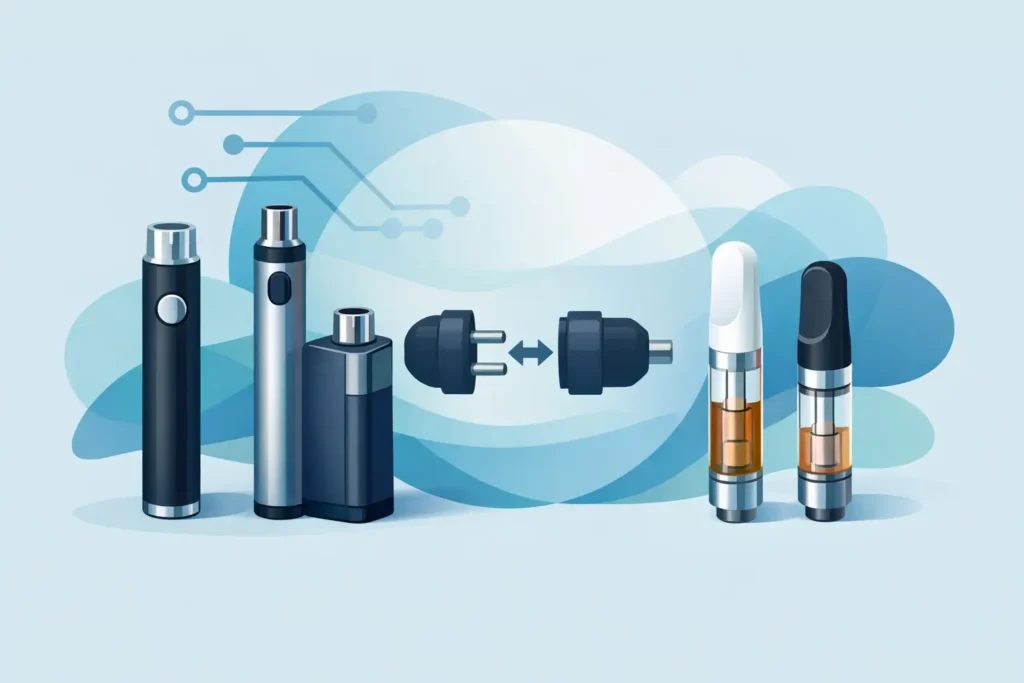
The most common cartridge format is the 510-thread cartridge. It has a small threaded base that screws directly into a compatible battery. If both products are genuinely 510-threaded, they will usually connect physically, which is why 510 batteries remain the easy, flexible choice for shoppers who use different cartridge brands.
Physical connection is only the first check. The centre pin at the bottom of the cartridge needs to touch the battery contact. If the pin sits too high, too low or is blocked by oil residue, the battery may flash, show an error light or do nothing at all.
Some cartridges use proprietary pod systems instead. These may click into a matching device with magnets or a shaped slot rather than screw on. A proprietary pod is not made to fit a standard 510 battery, even if the two products appear similar in size. Do not force it, bend contacts or try to modify the base. A battery and cartridge designed as a matched system are usually the safest option for that format.
What a 510 Thread Does and Does Not Guarantee
A 510 thread tells you the cartridge and battery should screw together. It does not guarantee the battery will heat the oil well. Cartridge oils vary in thickness, and heating elements are built with different resistance levels. One cart may be happy at a low setting while another needs a little more power to produce satisfying vapour.
It also does not promise perfect clearance. Wide cartridges can rub against a battery’s collar or sit awkwardly in a recessed port. Slim pen batteries have fewer fit issues, while larger box-style batteries may need a cartridge with enough exposed threading to make contact.
Choose a Battery With Adjustable Voltage
Voltage controls the heat sent to the cartridge coil. More voltage generally creates warmer, denser vapour, but it can also overheat the oil and flatten the flavour. Lower voltage is gentler, often giving a cleaner taste and making it easier to take smaller pulls.
For most cannabis oil cartridges, a low-to-mid setting is the sensible place to start. Around 2.5V to 3.3V is commonly comfortable for flavour and steady vapour. Thick distillate, colder weather or a cartridge that is drawing poorly may benefit from a modest increase. Jumping straight to the highest setting is rarely the answer.
High heat can scorch the wick, especially when the cartridge is nearly empty. Once that burnt taste appears, lowering the voltage may not restore the cartridge. The practical move is to begin low, take a short puff, then increase gradually only if the vapour is too light.
Button-operated batteries often offer several voltage settings with coloured indicator lights. Check the battery instructions so you know what each colour means. Draw-activated batteries are simpler, but many do not let you change the power level. They are convenient for everyday use, while variable-voltage models offer more control over different cart styles.
Resistance, Oil Thickness and Your Draw
The coil resistance inside a cartridge influences how quickly it heats. Lower-resistance coils tend to run hotter and create larger clouds at the same voltage. Higher-resistance coils may need more time or slightly more power, but can be better for a smoother, measured draw.
Oil thickness changes with temperature. A cart left in a cold car or chilly room may feel blocked because the oil has thickened, not because the battery is incompatible. Let it return to room temperature in an upright position before using it. Avoid heating it with a lighter, placing it on a radiator or leaving it in direct sun. Excess heat can cause leaks and damage the oil.
Your inhale matters too. Slow, gentle draws give the coil time to vaporise oil without flooding the airway. Hard, sharp pulls can pull excess oil into the mouthpiece, causing spitback, blockage and wasted product.
Airflow and Battery Shape Can Affect the Fit
Not every compatibility issue is electrical. Many cartridges draw air through small holes around the base. A battery with a tight collar, a magnetic adapter or a badly positioned contact can partially cover these holes. The cart may fire, but it will feel restricted.
Before use, inspect the gap between the cartridge base and battery. It should be secure without being screwed down excessively. Tightening a cartridge too firmly can damage the thread or push the centre contact out of position. Screw it on until it is snug, then stop.
Magnetic 510 adapters can make changing cartridges quick, but they add another potential failure point. The adapter must match the cartridge thread and sit straight. If vapour is weak after fitting one, remove it and check for oil on the contacts. A dry cotton tip can gently clean the metal connection. Keep liquid away from the battery body and charging port.
Charging Matters More Than Most People Think
A low battery can mimic a cartridge problem. You may get a blinking light, inconsistent heat or a hit that starts strong and fades halfway through. Charge the battery with the cable or charger type specified for that device, and disconnect it once charged where the manufacturer advises.
Avoid using a damaged cable, a loose charging port or an unsuitable high-output charger. Do not leave a battery charging on bedding, in a hot car or unattended for long periods. Like any lithium-ion device, a vape battery deserves basic care.
If the battery becomes unusually hot, swells, smells odd, leaks or stops charging normally, stop using it. Do not keep trying to fire a cartridge on a failing battery. Replace the device through an appropriate retailer or battery recycling option rather than tossing it in household rubbish.
Quick Checks When a Cartridge Will Not Work
When a cartridge will not fire, do not assume it is empty or faulty straight away. Work through the basics in order:
- Confirm the battery is charged and switched on. Many button batteries need five quick presses to turn on.
- Check that the cartridge type matches the battery. A 510 cart needs a 510 connection, while a proprietary pod needs its intended device.
- Unscrew the cartridge, inspect both contacts for oil or debris, and refit it gently.
- Try a lower or medium voltage before raising the heat. A blocked cart may need time at room temperature, not maximum power.
- If possible, test the cartridge with another known-compatible battery, or test the battery with another compatible cartridge.
This simple process helps identify whether the problem is the cart, the battery or the connection between them. If a new cartridge arrives damaged, leaking or with a broken thread, avoid using it and contact the seller with your order details and clear photos where requested.
Buying the Right Setup for Everyday Convenience
The easiest choice for flexibility is a quality 510-thread battery with variable voltage, preheat capability and a reliable USB charging connection. A preheat mode can gently warm thick oil before a draw, which is useful in cooler conditions. Use it sparingly: it is there to clear a stubborn cart, not to cook the oil repeatedly.
If you prefer no buttons and minimal fuss, a draw-activated 510 battery may suit you better. It is compact, straightforward and ideal when your cartridges are consistent. The trade-off is less control over heat and troubleshooting.
For customers choosing cartridges through HomeWeedShop, check the product description for the connection type and any battery recommendations before checkout. Matching the format early keeps your delivery experience simple and avoids having a fresh cart with no suitable way to use it.
A compatible setup should feel uncomplicated: the cartridge sits snugly, airflow stays open, the battery fires consistently, and the flavour remains clean at a sensible setting. Start gently, keep the contacts clean, and let the cartridge tell you whether it needs more power rather than forcing the issue.