
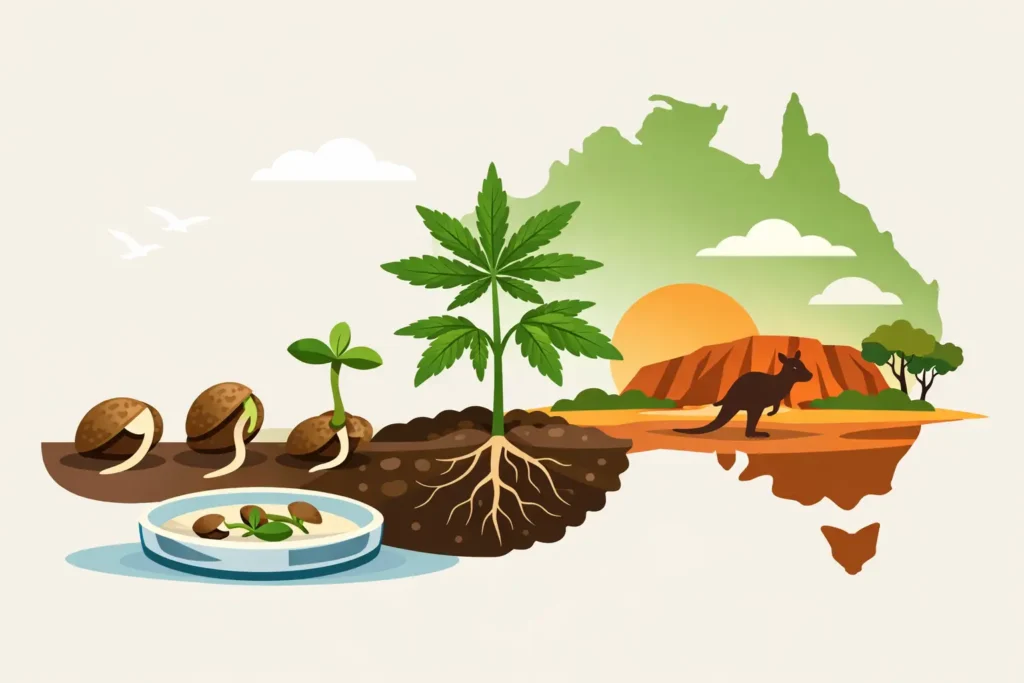
Cannabis Seed Germination for Australian Growers
Cannabis seed germination is the point where a promising seed either proves it is viable or shows that looks alone were never enough. Before you set up a tray, handle a seed or plan a grow, make sure you understand the laws in your state or territory. Cannabis cultivation is tightly regulated in Australia, and a seed being available does not automatically mean germinating or growing it is permitted where you live.
For adult enthusiasts who are legally able to grow, the goal is simple: give a healthy seed the clean, stable conditions it needs to wake up without drowning it, cooking it or handling it into trouble. Patience matters more than complicated gear.
Start With Seed Quality
A good germination result starts well before moisture enters the picture. Mature cannabis seeds are commonly firm when gently pressed and tend to have a darker outer shell, often with mottling or striping. Very pale, green, soft or cracked seeds can still occasionally surprise you, but they are generally less dependable than mature, intact seeds.
Freshness also affects the result. Seeds kept for long periods in heat, humidity or direct light may lose vigour, even if their shells still look fine. If you are storing seeds lawfully, keep them dry, dark and protected from temperature swings. A labelled, sealed container in a consistently cool place is more useful than repeatedly moving them in and out of warm areas.
Genetics and handling both matter. A quality seed may still fail if it has been crushed, exposed to moisture during storage or left in harsh conditions. On the other hand, an average-looking seed can sometimes germinate well when treated carefully. Think in terms of likelihood, not guarantees.
What Cannabis Seed Germination Needs
At its core, germination needs moisture, oxygen, gentle warmth and a clean environment. Once the seed absorbs water, internal processes begin and the shell softens. The first small root, known as the radicle, emerges and needs a suitable medium to continue developing.
The main balancing act is water. A seed needs consistent moisture, but soggy conditions limit oxygen and can encourage mould or rot. This is why more water is not better. The medium should feel lightly damp rather than saturated, with no standing water around the seed.
Stable warmth helps, while big temperature changes slow things down. Keep the area away from a cold windowsill, direct sun or a heater that blasts hot air. Gentle, even conditions are the target. Constant checking and moving the seed from place to place often causes more trouble than it solves.
Cleanliness is equally practical. Wash your hands, use clean containers and avoid reusing visibly dirty materials. Early roots are delicate, and contamination can turn a straightforward start into a disappointing one.
Choose a Method You Can Keep Stable
There is no single magic method for cannabis seed germination. The best option is usually the one you can manage with the least disturbance. Some growers germinate directly in a light, airy growing medium. Others begin in a starter plug or another purpose-made propagation medium that holds moisture while allowing airflow.
Direct planting has one clear advantage: it avoids transferring a newly emerged root. That root is easy to damage, especially if it catches on paper fibres or is handled with fingers. A propagation medium can make moisture easier to monitor and can be practical when starting several seeds, provided it is not kept waterlogged.
The familiar paper-towel approach is often discussed because it lets people see when a root appears. Its downside is exposure. Paper can dry out quickly, become too wet, grow mould or cling to the root. It also creates an extra transplant step. If you choose any method, avoid swapping between approaches halfway through unless there is a genuine problem.
Use clean water and do not rely on additives to do the basics. Strong fertilisers, stimulants and improvised household treatments are not a shortcut at this stage. A seed contains the initial energy it needs to begin.
Keep handling to a minimum
Once a root is visible, resist the urge to inspect it every few hours. It is not a test of whether you can intervene. The root should be positioned carefully in its medium without bending, pinching or leaving it exposed to light and dry air. Handle the seed shell rather than the root where possible, and use clean equipment if you need to move it.
A seedling then needs time to establish. It may take a little while for the first growth to appear above the surface, depending on seed condition and environmental consistency. Avoid digging around to check on progress. That can break the root or disrupt the fragile early shoot.
Timing: Why Rushing Causes Problems
Cannabis seeds do not all germinate on the same timetable. Some show signs of life quickly, while others take longer. Seed age, genetics, storage history and the surrounding conditions all influence the pace. Comparing one seed against another too early is an easy way to overcorrect.
The most common mistake is reacting to slow progress by adding excess water, changing temperatures or repeatedly opening the setup. This can create precisely the instability that delays germination. Set up suitable conditions, check moisture sensibly and give the seed room to do its job.
If several days pass without any change, assess the setup rather than immediately blaming the seed. Is the medium still lightly moist? Has it become cold overnight? Is there visible mould? Has the seed been planted too deeply or disturbed? Fix one likely issue at a time, then allow time for the change to work.
Common Problems and Sensible Fixes
A seed that does not germinate is not always a total loss, but it does need an honest assessment. Hard, dry seeds may simply need more time in a consistently moist environment. Seeds that become soft, smell unpleasant or show heavy mould are more likely to have rotted. In that case, cleaner materials and less moisture are usually better lessons than adding more products.
Stretching seedlings are another early warning sign. A long, thin stem often suggests the young plant is reaching for light or has been kept in conditions that are too warm and weakly lit. The answer is to review the environment, not to overfeed. At this stage, gentle stability beats aggressive intervention.
A seedling can also struggle when the medium is too compact. Roots need tiny air spaces as well as moisture. A suitable seed-starting mix should drain well and should not form a muddy, dense block after watering.
If you are starting more than one seed, label each one from the beginning. Strain names can become confusing fast, especially when several containers look identical. Accurate labels help you track timing and identify which genetics perform best in your legal growing conditions.
Legal and Privacy Considerations for Australian Buyers
Cannabis laws differ across Australia and can involve state, territory and Commonwealth rules. Medical access, possession, seed ownership and home cultivation are not interchangeable concepts. Check the current rules that apply to your exact location before germinating any cannabis seed, and only proceed where you are authorised to do so.
Privacy-minded shoppers should apply the same care to seed storage as they do to any sensitive purchase. Keep labels, order details and stored seeds secure, avoid sharing personal information unnecessarily, and make sure any delivery address is one where you can receive parcels privately and safely. Discreet packaging may help protect privacy, but it never changes the legal obligations that apply to the contents.
HomeWeedShop customers who are researching seeds should focus on clear product information, sensible storage and lawful decision-making rather than chasing unrealistic germination promises. No retailer can honestly guarantee a result once a seed is exposed to conditions outside its control.
Set Yourself Up for a Clean Start
The best cannabis seed germination approach is not the flashiest one. Start with viable seeds, clean materials, gentle warmth and a medium that is moist without being soaked. Then step back enough to let biology do what it is designed to do.
For legal growers, a calm setup and careful observation will take you further than constant tinkering. Treat each seed as a small test of preparation, not a race, and you will have a clearer read on both your seed quality and your growing conditions.