
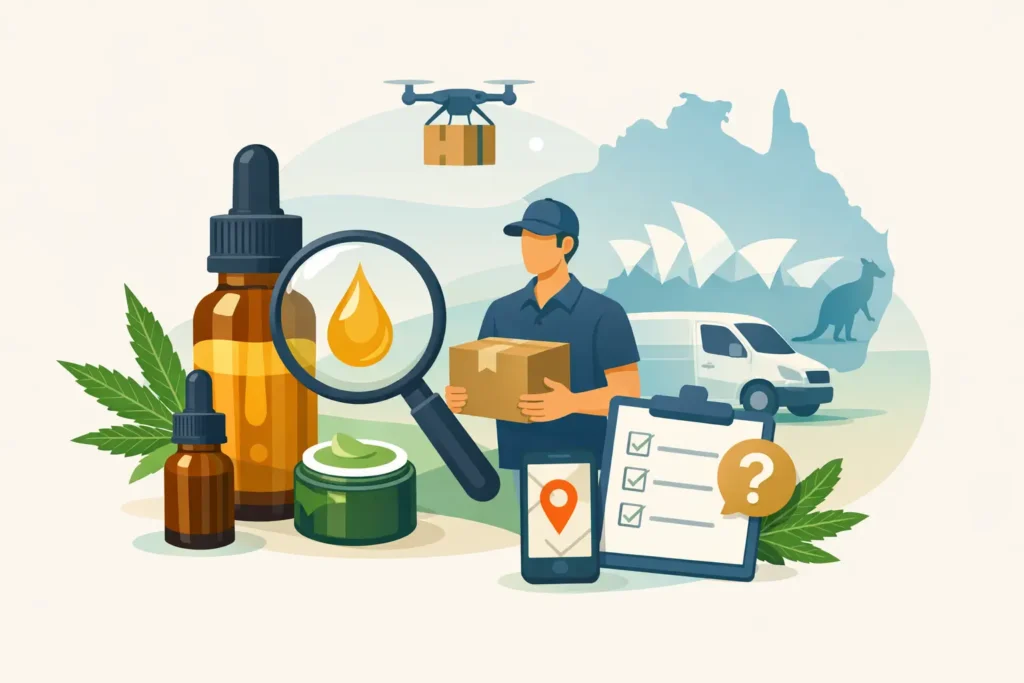
CBD Oil Delivery Australia: What to Check First
A parcel arriving at your door is convenient. With CBD products, though, convenience should never be the only thing you check. CBD oil delivery Australia searches often bring up big promises around fast shipping, privacy and easy checkout, but the right order starts with confirming that the product, prescriber and supplier meet Australian requirements.
For adults who value discreet service and a straightforward process, the goal is simple: get clear information before payment, know what is being supplied, and make sure delivery is handled properly. A legitimate pathway may take a little more effort than clicking through a flashy product page, but it protects your money, your details and your health.
How CBD oil delivery works in Australia
CBD is short for cannabidiol, a cannabinoid found in cannabis. It is not the same as THC, the compound associated with a psychoactive high. That distinction matters, but it does not mean every CBD oil can be freely bought online or sent anywhere without checks.
In Australia, most CBD products are prescription medicines. Access commonly involves a consultation with an authorised doctor or nurse practitioner, followed by dispensing through a pharmacy or approved medicinal-cannabis service. Rules, product availability and prescribing decisions can vary, so customers should rely on current advice from their treating practitioner and pharmacist rather than broad claims on a retail page.
A small number of low-dose CBD products may be pharmacist-only under Schedule 3 rules, but availability has been limited in practice. The packaging, permitted dose, pharmacy process and eligibility requirements still matter. If a seller presents CBD oil as universally available with no questions asked, treat that as a reason to slow down, not a reason to rush.
Once a lawful prescription has been issued and the medicine is dispensed, delivery can be arranged to a home, workplace or another appropriate Australian address, depending on the pharmacy’s policy. Regional and remote customers may need to allow extra time, particularly during public holidays, severe weather or periods of high parcel demand.
What to check before arranging CBD oil delivery Australia
The strongest trust signal is not a countdown timer or a “limited stock” banner. It is clear, verifiable information about the medicine and the people supplying it. A reputable provider should be able to explain the consultation process, the product’s ingredients and concentration, expected dispensing time, delivery method and support options.
Start by checking whether you have a valid prescription where one is required. Your clinician should know about your existing conditions, current medicines, allergies and the result you are hoping to achieve. CBD can interact with some medicines, including treatments processed by the liver. “Natural” does not automatically mean risk-free.
Then look closely at the product information. A proper label should identify CBD content, carrier oil or other ingredients, batch details, expiry date, storage instructions and directions provided by the prescriber or pharmacist. Be cautious with vague labels that only state “hemp oil”, make inflated wellness promises or avoid showing what is actually in the bottle.
Payment is another practical checkpoint. Before entering bank-transfer or PayID details, confirm the business identity, obtain a clear order record and understand what happens if the order cannot be fulfilled. Legitimate suppliers should not pressure you to make a payment before basic questions about the product, prescription status and delivery process have been answered.
Finally, read the privacy information. A delivery service needs your name, address and contact details, but it should only collect what is needed to process and support the order. Use a secure personal connection when sharing health or payment information, and avoid sending prescriptions, ID documents or bank details through informal social-media messages.
Discreet packaging should still be accountable
Privacy matters to many CBD customers, especially those living in shared homes, apartment buildings or small communities. Plain outer packaging can help protect discretion, but it should not hide essential accountability. You should still receive order confirmation, tracking where available, a way to contact the pharmacy or supplier, and a record of what was dispensed.
Think of discreet packaging as a delivery preference, not proof of legitimacy. The key questions remain the same: who supplied the product, what is in it, and can you reach a qualified person if something is wrong?
Delivery timing, storage and receiving your order
Same-day delivery may be possible in selected metro areas, but it depends on the dispensing cut-off, stock on hand, courier coverage and whether all prescription checks have been completed. For most customers, a realistic delivery estimate is more useful than an overconfident promise. Ask whether dispatch happens after payment, after pharmacist review, or only once the medicine has been prepared.
CBD oil is generally more stable than some temperature-sensitive medicines, yet storage still matters. Keep it in line with the label directions, away from direct sunlight, heat and children. Do not leave a parcel sitting in a hot letterbox or on a front step all afternoon if it can be avoided. If the bottle arrives damaged, leaking, unsealed or without the expected label, contact the dispensing pharmacy before using it.
If you live in a regional area, consider a secure delivery address where someone can receive the parcel. Parcel lockers, workplace addresses and signature requirements can be useful in some circumstances, but they are not right for everyone. A shared workplace may not suit a product you prefer to keep private, while an unattended home address may create avoidable risk.
Keep the conversation with your prescriber open
CBD is not a one-size-fits-all product. The right formulation, concentration and dosing schedule depend on why it has been prescribed, how you respond and what other medicines you use. Follow the directions on your prescription rather than copying a dose shared in a forum, by a mate or in a product review.
It can help to keep a brief note of when you take the medicine, any changes you notice and any unwanted effects. This gives your clinician something useful to work with at a follow-up appointment. Do not adjust your dose suddenly or combine CBD with other cannabis products without discussing it with your prescriber.
Be especially careful before driving, operating machinery or mixing cannabis-derived products with alcohol or sedating medicines. Even where a CBD product is intended to contain little or no THC, product composition, individual response and road laws require caution. Your doctor or pharmacist can provide advice that fits your situation.
Red flags that are not worth ignoring
Fast, private delivery is a reasonable expectation. Claims that bypass medical oversight, however, are not a shortcut worth taking. Walk away from suppliers that guarantee a cure, refuse to identify the product’s contents, offer prescription-only medicines without a prescription, or make it difficult to contact a pharmacist or qualified support team.
The same applies to deals that sound too good to be true. Very low prices, urgent payment demands, crypto-only requests, inconsistent business names and no written delivery or refund process can leave customers with little recourse. Convenience should reduce friction, not remove every safeguard.
A good CBD delivery experience feels clear from the first consultation through to the parcel at your door. Choose lawful supply, protect your personal details and give your prescriber or pharmacist a call whenever the label, delivery or product itself does not look right.