
How to Identify Quality Hashish Before You Buy
A block of hash can look impressive in a product photo, then arrive dry, harsh-smelling or poorly handled. Knowing how to identify quality hashish helps you assess what is in front of you without relying on hype, a strain name or a dark, glossy finish alone. The best signs are usually simple: a clean aroma, a consistent texture, sensible packaging and no obvious signs of contamination.
For Australian adults, cannabis laws differ by state and territory, and recreational cannabis remains illegal in most circumstances. Always check the rules where you live and only deal with lawful, regulated options where available. Quality checks are not a substitute for legal compliance or for medical advice.
How to Identify Quality Hashish at First Look
Hashish is a concentrate made by collecting cannabis resin glands, known as trichomes, then pressing or processing them. That broad definition matters because good hash does not have one universal appearance. Traditional pressed hash, dry-sift hash and solventless styles can vary in colour, firmness and how they respond to warmth.
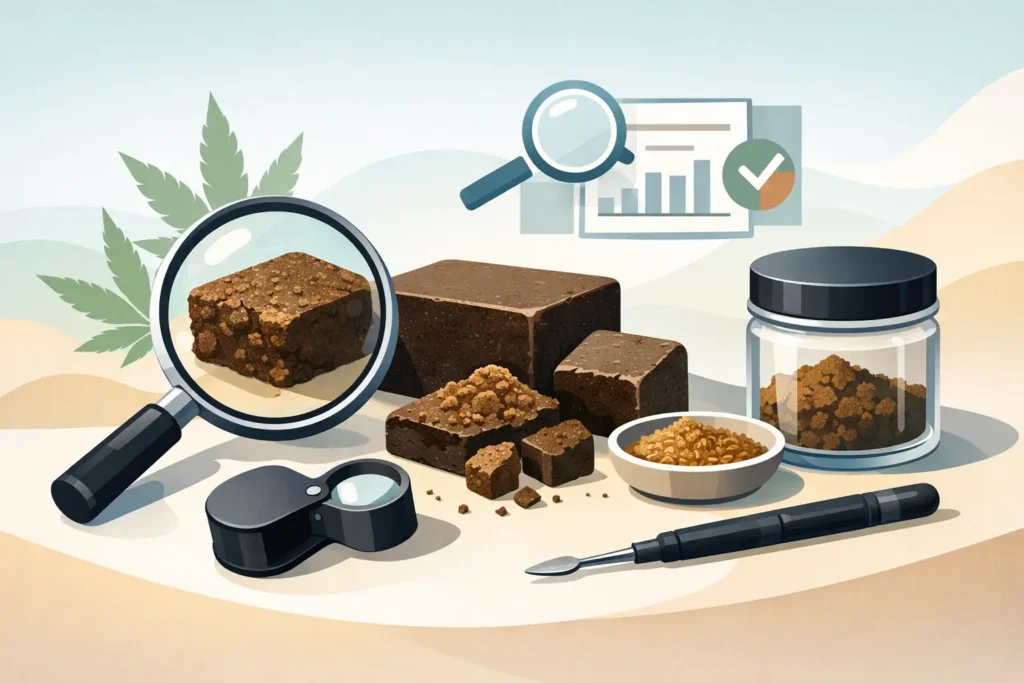
Start by looking for consistency. A quality piece should appear reasonably even throughout, without mystery specks, fibrous material, grit or patches that look mouldy. The outside may be slightly darker than the centre due to oxidation, especially in pressed styles. That alone is normal. A sharp contrast between a glossy black shell and a pale, dusty or crumbly interior is worth inspecting more closely, particularly if the product has no clear handling or storage information.
Colour can range from blonde and sandy through to light brown, deep brown and nearly black. Lighter is not automatically better, and darker does not automatically mean it is stronger. Colour is affected by the source material, how finely the resin was sifted, pressure, age, heat and storage. Treat colour as one clue, not the final verdict.
What clean resin usually looks like
Well-made hash generally has a uniform, resin-rich look rather than a flat, lifeless appearance. With dry sift, a soft golden or light-brown tone can suggest carefully separated trichomes, but plant matter may still be present. With traditional pressed hash, a darker exterior and pliable centre may be entirely appropriate.
What you do not want to see is obvious fluff, hairs, dirt, shiny plastic-like fragments or uneven white, grey or green growth. White crystal-like specks can sometimes be natural resin, but fuzzy, web-like or spreading patches are a red flag for mould. If you are unsure, do not try to scrape away the suspect area and keep the rest. Leave it alone.
Aroma Tells You More Than Colour
Aroma is one of the more useful quality signals because cannabis resin holds many of the plant’s aromatic compounds. Fresh, properly stored hash may smell earthy, spicy, citrusy, piney, floral or distinctly herbal, depending on the cultivar and production style. It should smell like concentrated cannabis, not like a chemical cupboard.
A very old product can lose much of its aroma without necessarily being contaminated, but a dull, stale smell tells you it may have been exposed to too much air, light or heat. That can reduce the character people expect from a resin product.
Be cautious around harsh scents. The following odours should make you stop and reassess:
- Strong solvent, fuel, paint or synthetic perfume smells
- Damp basement, mildew or mouldy odours
- Burnt rubber, hot plastic or heavily perfumed scents
- Sour, rancid or unusually musty notes
A pungent smell is not the same as a bad smell. Hash can be naturally intense. The key difference is whether the aroma feels plant-derived and clean, rather than artificial, damp or chemically sharp.
Check Texture Without Overthinking It
Texture depends heavily on style and temperature. A quality pressed hash may be firm when cool, then soften slightly between clean fingers as the resins warm. Some dry-sift products stay sandy or crumbly, while others become more cohesive after pressing. Neither format is automatically superior.
Instead, look for a texture that matches the product description and has been stored appropriately. A block that is rock-hard, brittle and dusty may be old or overly dry. Hash that is excessively oily, sticky on the outside or leaking through packaging may have been overheated in transit or stored poorly. In Australia, a parcel left in direct summer heat can change texture quickly, so one warm day does not prove that the original product was low grade. It does, however, affect freshness and handling.
A small amount of pliability is often a positive sign in traditional styles. It should not feel like modelling clay, candle wax or soft plastic. Those textures can suggest excessive processing or unwanted material, although you cannot confirm purity by touch alone.
Avoid the old internet habit of treating a bubble test or flame test as proof of quality. Burning a sample cannot reliably identify contaminants, and it may create unnecessary exposure to unknown substances. Visual checks, aroma, packaging and transparent product information are safer starting points.
Packaging and Product Information Matter
For a product that is legally supplied through an authorised pathway, packaging should help you understand what you have received. Clear labelling, a batch reference, weight, date information and storage guidance are all reassuring signs. In regulated medical settings, cannabinoid information and prescribing details may also be relevant.
Poor packaging does not always mean poor hash, but it can quickly turn good hash into an inferior experience. Resin is sensitive to heat, oxygen, moisture and light. A product pressed directly against thin plastic, carried loose or left in a hot mailbox is more likely to lose aroma, pick up odours or become difficult to assess.
Discreet delivery is useful for privacy, but the inner packaging still needs to protect the product. On arrival, check that the seal is intact, that there is no unexplained moisture and that the product has not been crushed into a greasy smear. If something seems wrong, take clear photos before handling it further and contact the seller through their official support channel.
Questions worth asking before checkout
If you are using a lawful seller, straightforward answers are a good trust signal. Ask what type of hash it is, whether it is dry sift or pressed resin, how it has been stored, and whether batch or date information is available. You can also ask whether the listed weight refers to the net product weight and what to do if packaging arrives damaged.
A dependable retailer should not need to make wild claims about impossible potency or guarantee that every piece looks identical. Cannabis is an agricultural product. Natural variation exists, particularly between batches. The better standard is honest product descriptions, protective packing and support when an order does not arrive as described.
Freshness, Storage and the Reality of Delivery
Even quality hash needs sensible storage after delivery. Keep it sealed in an airtight container, away from sunlight, high heat and excessive humidity. A cool, dark cupboard is generally more stable than a car, windowsill or bathroom cabinet. Avoid constant opening and closing, which introduces warm air and moisture.
Do not assume refrigeration is always the answer. Cold storage can create condensation if the container is opened before it has reached room temperature. For short-term storage, a stable cool area is usually the simpler option. For anything you are concerned may be mouldy, chemically contaminated or otherwise unsafe, do not attempt to dry it out or fix it at home.
Freshness is also why fast, carefully packed delivery matters. A product can leave in good condition and deteriorate when exposed to heat or delays. Check orders promptly, especially during warmer weather, rather than leaving a parcel unattended all afternoon.
Quality Is More Than Potency
The strongest-looking or strongest-smelling hash is not necessarily the best choice. Quality is the combination of clean source material, careful separation, proper pressing, honest handling and storage that protects the resin. A balanced, well-kept product with a natural aroma is more reassuring than something marketed with exaggerated claims and no useful detail.
When assessing hashish, trust the full picture. Look for a consistent appearance, smell for clean cannabis character, consider whether the texture suits the style, and pay attention to packaging and seller transparency. If any part of that picture feels off, the smart move is simple: do not force a verdict, and do not use a product you cannot confidently assess.