
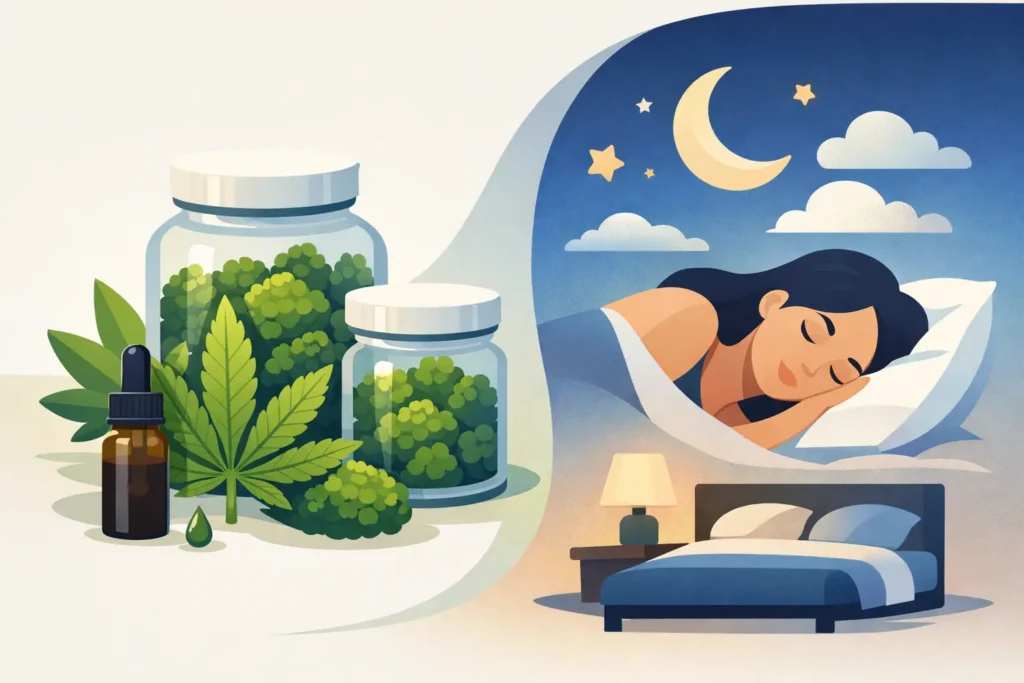
Best Cannabis Strains for Sleep: What to Consider
A strain that leaves one person pleasantly heavy-eyed can leave another staring at the ceiling, checking the clock at 2 am. That is the catch with searching for the best cannabis strains for sleep: the name on the jar matters less than the product’s actual profile, your tolerance, how much you use, and when you take it.
For adults who choose cannabis as part of an evening wind-down, the goal is usually simple: settle the body, quiet the mental noise and avoid feeling foggy the following morning. Cannabis can feel relaxing for some people, but it is not a guaranteed sleep fix. Effects vary widely, and frequent or heavy THC use can interfere with sleep quality over time.
What makes a cannabis strain feel sleep-friendly?
People often reach for indica-labelled flower when sleep is the priority. Indica, sativa and hybrid labels can be a useful starting point in retail, but they are not a reliable prediction of how a particular batch will feel. Two products carrying the same strain name may differ in cannabinoid levels, terpene content, freshness and potency.
A more practical way to assess a strain is to look for a calming overall profile. Many sleepers prefer flower or extracts with moderate to higher THC, a less racy feel, and terpenes commonly associated with earthy, herbal or floral aromas. Myrcene, linalool and beta-caryophyllene are often discussed in this context. Their presence does not promise sedation, but aroma and terpene information can help you compare products beyond a basic indica label.
THC can shorten the time it takes some people to drift off, particularly at a low or moderate amount. Too much, however, may create anxiety, a racing heart, dry mouth or a groggy morning. CBD-heavy options are different again. Some users find CBD products calming, while others notice very little. A balanced THC:CBD product can feel gentler than high-THC flower, but the right ratio depends on the person.
Best cannabis strains for sleep: common names to know
Certain strain names come up repeatedly in late-night conversations because they have a reputation for a body-led, slower pace. That reputation is only a guide, not a clinical result, but it can narrow your search when comparing available products.
Northern Lights
Northern Lights is a classic choice for people who prefer a quieter, more physically relaxing experience. It is commonly described as earthy and sweet, with an evening-friendly character. For someone prone to overstimulation from bright, energetic strains, Northern Lights may be a more sensible name to consider.
Granddaddy Purple
Granddaddy Purple is known for its grape-like, berry and earthy profile. It is often associated with a heavier body sensation and a laid-back finish, which is why it has remained a popular night-time strain. Its potency can vary significantly, so a modest amount is still the smarter starting point.
Afghan Kush
Afghan Kush is another traditional indica-leaning name with a reputation for a dense, tranquil effect. Its woody, spicy and earthy notes suit people who enjoy old-school cannabis profiles rather than sweet dessert-style strains. It may feel too heavy for an early evening if you still have chores, messages or a show to finish.
Wedding Cake
Wedding Cake is often sold as a hybrid, yet many users describe it as deeply relaxing once it settles in. It can be a good example of why labels are not everything. Depending on the batch and your tolerance, it may feel calming and cosy or simply potent, so it is better suited to an unhurried night than a quick fix before bed.
Blue Dream and other hybrids
Blue Dream is popular for good reason, but it is not automatically a sleep strain. Some adults find its balanced profile relaxing at lower amounts, while others find it mentally active. The same applies to many hybrids: they may work well for unwinding after dinner but be less suitable right before lights-out. If your mind is already busy, an energetic-leaning hybrid can be a gamble.
Choose the format as carefully as the strain
Flower, vapes, edibles and oils do not arrive or fade in the same way. A person who says a strain “kept them awake” may really have had an issue with dose, timing or format.
Inhaled flower and vape products generally take effect quickly, making it easier to gauge whether you have had enough. The trade-off is a shorter duration, which may not suit people who wake repeatedly through the night. Vaping can also feel deceptively easy to repeat, so pause before taking another pull.
Edibles take much longer to come on, commonly one to several hours depending on food, metabolism and the product. They can also last well into the next day. That extended duration is why edibles require patience, especially for newer users. Taking more because nothing is happening after 30 minutes is one of the fastest ways to have an uncomfortable night.
CBD oil or balanced oils may suit adults who want a more measured routine. The effects can be subtler, and the right amount is not universal. Check the cannabinoid content rather than assuming that every oil is low strength or non-intoxicating.
Dose and timing matter more than chasing the strongest option
When sleep is the aim, stronger is not necessarily better. High THC may feel sedating initially, but it can also amplify the very things that make sleep difficult: anxious thoughts, physical discomfort, an unsettled stomach or an elevated heart rate.
Start low, especially with a new strain, a new product type or a batch with higher THC than you normally use. Give inhaled products time to settle before deciding whether to use more. With edibles, give them much longer. Keep the first trial for a night when you do not need to drive, work early or make important decisions the next morning.
Timing is just as personal. Some people prefer a small amount one to two hours before bed, while others find that using cannabis too close to bedtime makes them sleepy but less refreshed. A brief note on the strain, format, amount, timing and next-day feeling can reveal patterns far more useful than online hype.
When cannabis may not be helping your sleep
If you find yourself needing more cannabis to get the same effect, waking up irritable, or sleeping poorly on nights when you do not use it, it may be time to rethink the routine. Regular THC use can lead to tolerance, and stopping after frequent use can temporarily bring vivid dreams and disrupted sleep.
Cannabis is also not the right answer for every sleep problem. Loud snoring, gasping, persistent insomnia, low mood, pain that is worsening or daytime sleepiness deserve a conversation with a GP or qualified health professional. Do not mix cannabis with alcohol, sleeping tablets, benzodiazepines, opioids or other sedating medicines unless a clinician who knows your situation has advised you. Avoid it during pregnancy or breastfeeding, and never drive or operate equipment while impaired.
Australian laws and access rules vary by state and territory, so make sure any cannabis product you use is obtained and used in line with local requirements. Privacy and convenience are valuable, but so is knowing exactly what you are taking and how it affects you.
The best place to start is not the highest THC percentage or the loudest strain name. Choose a calm setting, try one carefully selected option at a modest amount, and pay attention to how you feel the next morning. The strain that supports a genuinely restful night is the one that lets you wake up clear enough to get on with your day.